Design Verification vs Validation: What’s the Difference and Why It Actually Matters in B2B SaaS
How verification and validation differ, when to use them, and why both matter in B2B SaaS.


Table of Contents
Title
Title
Title
Design verification and validation each play a distinct role in the SaaS product lifecycle. While the first confirms that a product behaves as intended, the second ensures it delivers the right value.
Design verification and design validation often appear side by side in product conversations, yet they serve very different purposes. As B2B SaaS products grow in complexity, understanding how the two work and how they complement each other helps teams build experiences that stay stable, intuitive, and grounded in real workflows.
While design verification helps teams assess whether a product behaves as intended, design validation reveals whether it delivers value in real conditions. Both are vital checkpoints in a modern B2B SaaS lifecycle, especially when new features ship quickly and customer expectations evolve even faster.
In practice, the distinction becomes clearer through continuous discovery and iteration, two principles deeply rooted in effective product design services and essential for keeping SaaS products on track as they scale.
What Is Design Verification?
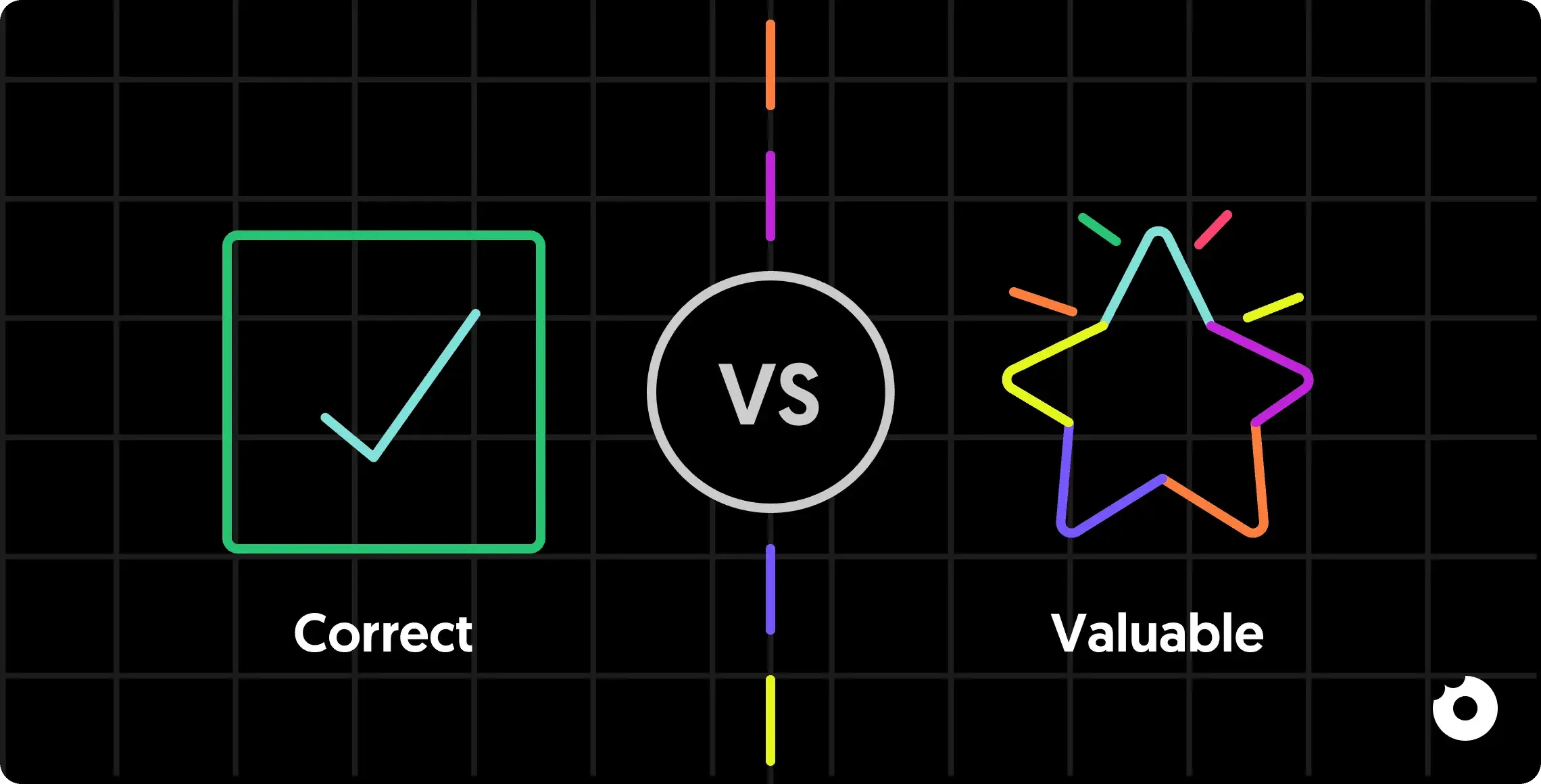
Design verification is the process of confirming that a product behaves as intended, based on what the team has defined upfront.
It checks whether requirements have been translated into a coherent experience that follows the planned flows, respects established patterns, and remains predictable as the product evolves.
In B2B SaaS, verification is particularly valuable because complexity compounds quickly. New features are introduced, workflows expand, and multiple teams contribute to the interface at the same time. Verification here helps keep everything aligned before changes reach real users, so the product feels consistent and the underlying logic holds up across screens and states.
Rather than assessing whether a solution is valuable or desirable, design verification focuses on correctness and coherence. Teams look at how interactions behave in practice, whether designs reflect the rules of the design system, and whether the experience matches what was agreed in specifications and acceptance criteria.
Done systematically, verification reduces ambiguity during implementation, improves collaboration between design and engineering, and creates a more stable foundation for long-term product quality.
In a nutshell, design verification helps teams answer a simple question: are we building the product right?
Methods and Activities in Design Verification
Design verification relies on structured checks that help teams confirm whether a product behaves according to expectations.
In B2B SaaS, these activities keep features aligned with intent, keep interactions predictable, and prevent inconsistencies from spreading as the product evolves. By catching gaps early, teams can refine flows before development and protect the stability of the experience release after release.
Here are some of the most common design verification activities used in modern SaaS design processes:
Requirements and flow reviews, to confirm the solution reflects the intended logic and supports the user journey.
Interaction behaviour checks, to review states, transitions, and edge cases before implementation.
Design system alignment, to keep components and patterns consistent across the interface.
Prototype reviews, to spot gaps and misalignment while iteration is still lightweight.
Delivery alignment checks, to ensure designs match acceptance criteria and technical constraints agreed with engineering.
Cross-team critiques, to surface inconsistencies early and keep decisions aligned across squads.
Why Design Verification Matters in B2B SaaS Products
In fast-moving SaaS environments, design verification gives teams a stable way to translate intent into execution. It helps keep the product coherent as new features ship, workflows expand, and multiple contributors touch the interface.
Verification matters because it:
Surfaces misalignment early, when adjustments are quick and inexpensive.
Improves handoffs, reducing ambiguity between design and engineering during implementation.
Keeps interfaces consistent, so users experience familiar patterns even as the product grows.
Protects long-term quality, preventing small inconsistencies from turning into design debt.
Supports scalable delivery, making releases more predictable across teams and squads.
Ultimately, design verification helps ensure that what gets built reflects the original intent and that the product remains stable as it evolves.
What Is Design Validation?
Design validation determines whether a product or feature delivers value in real conditions.
While verification confirms that a solution has been built correctly against what the team defined, validation focuses on what happens when that solution meets real workflows. In B2B SaaS, it’s the step that helps teams understand whether users can complete meaningful tasks smoothly and whether the experience supports the outcomes they care about.
Validation looks beyond functional correctness and checks for fit. It highlights where people hesitate, what they misunderstand, and what gets ignored even when it has been implemented “perfectly.”
This is often where teams discover hidden assumptions, small beliefs about users, context, or motivation that don’t hold up once the product is used outside the room where it was designed.
Because SaaS environments keep evolving, design validation is most effective as a recurring practice rather than a final gate. It keeps product decisions anchored to real needs and observable behaviour, reducing the risk of shipping features that are consistent on paper but weak in everyday use.
Simply put, design validation makes it possible to answer another key question: are we building the right product?
Methods and Activities in Design Validation
Design validation relies on evidence from real use. These activities help teams understand whether a solution resonates with its audience and supports the outcomes it was designed for.
Common validation methods in SaaS include:
Usability testing, observing how users interact with prototypes or live features to spot friction and confusion.
User interviews and contextual exploration, to understand expectations, behaviours, and what users are trying to achieve.
Beta programs, giving selected customers early access and a channel for focused feedback.
A/B experiments, comparing variations to see which version drives stronger outcomes, such as activation or task completion.
Product analytics, tracking how users move through flows, where they drop off, and what actions signal value.
In-product feedback loops, capturing signals from active users at scale.
Each method adds a different layer of insight, helping teams understand how a solution performs once it meets real workflows.
Why Design Validation Matters in SaaS Products
In B2B SaaS, design validation keeps product decisions connected to real use. It helps teams avoid shipping features that look right internally but fall short once they meet everyday workflows.
Validation matters because it:
Anchors decisions to real behaviour, reducing reliance on assumptions during prioritization.
Reveals friction early, when a change is still easy to make and cheaper to implement.
Improves adoption and retention, by refining experiences around what users actually do and understand.
Accelerates learning between releases, turning each iteration into clearer next steps.
Protects long-term relevance, so the product evolves without drifting away from customer needs.
Ultimately, validation strengthens confidence in what to build next and why.
Design Verification vs Validation: The Key Differences Explained
Design verification and design validation often sit in the same conversation, but they operate on two different kinds of truth.
Verification checks the solution against what the team defined: how it should behave, what it should support, and how it should look and feel across the interface.
Validation checks the solution against what happens in practice: whether users understand it, move through it smoothly, and get the value the team intended.
That split shapes everything else.
Verification can run whenever there is a clear intent to confirm, so it shows up early and repeatedly as designs take form. It draws from internal artefacts such as acceptance criteria, documented decisions, and shared interface standards, and it relies on reviews that remove delivery ambiguity.
Validation becomes meaningful as soon as real use enters the picture. It depends on feedback, observed behaviour, and performance signals that show whether the experience holds up in real workflows.
The outcomes are different too.
Design verification builds confidence in correctness and consistency, which helps implementation move faster with fewer surprises.
Validation builds confidence in relevance and impact, which helps teams avoid investing in features that are polished but weak in everyday use.
The participants shift accordingly:
Verification is mostly internal,
Validation requires exposure to users and real usage signals.
Skipping either step introduces a predictable risk. Verification gaps tend to surface as inconsistency and avoidable friction, while validation gaps tend to surface as building the wrong thing with high quality.
When Verification and Validation Happen in the SaaS Product Lifecycle
Timing is one of the easiest ways to keep verification and validation distinct. Verification can run as soon as the team has defined an intended experience to align on. It fits naturally into the build-up phase, where clarity matters most and changes are still lightweight.
Validation starts when there is something users can meaningfully react to. That might happen earlier than many teams expect, but it requires exposure through a prototype, a controlled release, or live usage signals. From there, it becomes a recurring loop that keeps decisions connected to real behaviour as the product evolves.
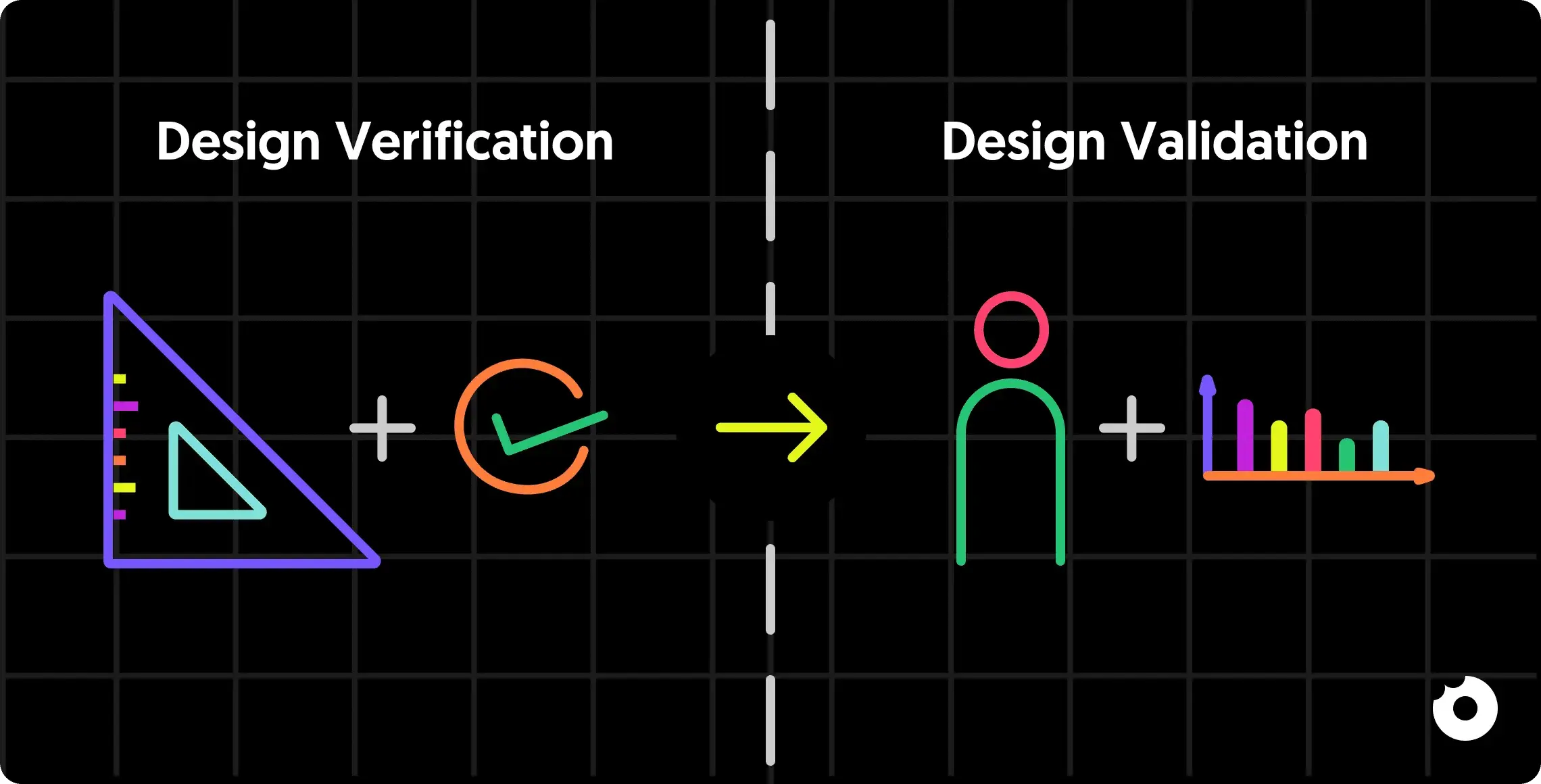
Design Verification vs Design Validation
The Key Differences Explained
Design Verification | Design Validation | |
|---|---|---|
Reference point | Requirements & design intent | User needs & real behavior |
Core question | Are we building the product right? | Are we building the right product? |
What it checks | Accuracy against requirements | Value in real-world conditions |
What it produces | Confidence in functional correctness | Confidence in user satisfaction |
Typical evidence | Design reviews, prototype evaluation | User tests, feedback, analytics |
What it prevents | Internal design flaws | Misalignment with user needs |
Why SaaS Teams Need Both Verification and Validation
Design validation and verification work best together because they protect product teams from two different failure modes.
Verification keeps execution coherent as the product grows, translating intent into consistent behaviour across screens, states, and new releases.
Validation protects a different layer: whether the solution holds up in real workflows. It brings real use into the process and surfaces gaps that internal reviews rarely catch, such as misunderstandings, hesitation, or features that feel polished but fail to deliver value in everyday conditions.
Used together, design verification and validation make product evolution easier to sustain. They prevent small inconsistencies from accumulating, reduce the cost of late fixes, and help teams invest in improvements that users actually notice.
Over time, that combination supports healthier activation and retention, because the experience remains both dependable and genuinely useful.
Design Verification vs Validation Example: A Simple SaaS Scenario
A practical way to see the difference between design verification and validation is to look at a common SaaS scenario: improving the onboarding flow for new accounts.
The goal is straightforward: help users reach first value faster. But the work behind that goal benefits from two distinct checks.
Design verification starts from intent. Before the flow reaches real users, the team wants to confirm it behaves exactly as planned. For onboarding, that typically means:
The steps match the requirements and the planned sequence.
Key states and transitions behave correctly, including edge cases.
The flow stays consistent with established UI patterns and copy guidelines.
The experience aligns with the acceptance criteria agreed with engineering.
At this stage, the question is simple: does the onboarding behave the way it was designed to behave?
Design validation starts from reality. Once real users interact with the flow, the team needs to understand whether it delivers the intended value. That often comes down to evidence such as:
Do users understand what each step is asking them to do?
Do they recognise progress and feel confident about what happens next?
Do they reach activation smoothly, or drop off at a recurring point?
Do product signals indicate faster time-to-value after the change?
This is where user testing, targeted feedback, and product analytics reveal whether the updated onboarding supports real workflows.
In short, verification confirms the onboarding is built correctly. Validation confirms it works in practice and supports the activation outcomes the business relies on.
How to Integrate Verification and Validation Into a Modern SaaS Design Process
Verification and validation work best when they’re embedded in the operating rhythm of a SaaS team. Releases are frequent, priorities change, and real usage keeps reshaping what “good” looks like. A resilient process treats design verification and validation as recurring practices that guide decisions before and after shipping.
A practical way to start is to define a simple loop: explore - review - ship - learn. Discovery work clarifies what needs to be true, design reviews confirm that the experience is taking shape in a coherent way, and post-release signals then show what actually happens in use. When that loop is explicit, iteration becomes a normal continuation of delivery rather than a reaction to emergencies.
Consistency also needs ownership. A design system, maintained with lightweight governance, creates a shared baseline teams can rely on. It makes design verification easier to run across multiple squads because patterns stay recognizable, components behave consistently, and new work has a clear reference.
Validation stays close to reality through small, repeatable checks. Quick user sessions, focused feedback moments, and product usage signals help teams confirm whether the experience supports real workflows and produces the intended outcome. Over time, validation becomes less about one-off experiments and more about staying connected to what users actually do.
Conclusion: Building SaaS Products That Stay Clear, Usable, and Scalable
Design verification and design validation serve different purposes, and both are essential as a SaaS product grows. Verification keeps execution coherent as features expand. Validation confirms that what ships continues to deliver value in real workflows. Together, they help teams improve with confidence, protecting quality while reducing avoidable friction.
High-performing SaaS teams treat this as a discipline, not a phase. They build a repeatable way to check intent, test outcomes, and learn from each release, so product decisions stay consistent even as priorities shift and complexity increases.
If you want to embed this kind of clarity into your product roadmap, we can support you with research-led design and scalable systems built for continuous improvement. Get in touch to discuss your product goals → https://donux.com/contact-us
Design verification and validation each play a distinct role in the SaaS product lifecycle. While the first confirms that a product behaves as intended, the second ensures it delivers the right value.
Design verification and design validation often appear side by side in product conversations, yet they serve very different purposes. As B2B SaaS products grow in complexity, understanding how the two work and how they complement each other helps teams build experiences that stay stable, intuitive, and grounded in real workflows.
While design verification helps teams assess whether a product behaves as intended, design validation reveals whether it delivers value in real conditions. Both are vital checkpoints in a modern B2B SaaS lifecycle, especially when new features ship quickly and customer expectations evolve even faster.
In practice, the distinction becomes clearer through continuous discovery and iteration, two principles deeply rooted in effective product design services and essential for keeping SaaS products on track as they scale.
What Is Design Verification?
Design verification is the process of confirming that a product behaves as intended, based on what the team has defined upfront.
It checks whether requirements have been translated into a coherent experience that follows the planned flows, respects established patterns, and remains predictable as the product evolves.
In B2B SaaS, verification is particularly valuable because complexity compounds quickly. New features are introduced, workflows expand, and multiple teams contribute to the interface at the same time. Verification here helps keep everything aligned before changes reach real users, so the product feels consistent and the underlying logic holds up across screens and states.
Rather than assessing whether a solution is valuable or desirable, design verification focuses on correctness and coherence. Teams look at how interactions behave in practice, whether designs reflect the rules of the design system, and whether the experience matches what was agreed in specifications and acceptance criteria.
Done systematically, verification reduces ambiguity during implementation, improves collaboration between design and engineering, and creates a more stable foundation for long-term product quality.
In a nutshell, design verification helps teams answer a simple question: are we building the product right?

Methods and Activities in Design Verification
Design verification relies on structured checks that help teams confirm whether a product behaves according to expectations.
In B2B SaaS, these activities keep features aligned with intent, keep interactions predictable, and prevent inconsistencies from spreading as the product evolves. By catching gaps early, teams can refine flows before development and protect the stability of the experience release after release.
Here are some of the most common design verification activities used in modern SaaS design processes:
Requirements and flow reviews, to confirm the solution reflects the intended logic and supports the user journey.
Interaction behaviour checks, to review states, transitions, and edge cases before implementation.
Design system alignment, to keep components and patterns consistent across the interface.
Prototype reviews, to spot gaps and misalignment while iteration is still lightweight.
Delivery alignment checks, to ensure designs match acceptance criteria and technical constraints agreed with engineering.
Cross-team critiques, to surface inconsistencies early and keep decisions aligned across squads.
Why Design Verification Matters in B2B SaaS Products
In fast-moving SaaS environments, design verification gives teams a stable way to translate intent into execution. It helps keep the product coherent as new features ship, workflows expand, and multiple contributors touch the interface.
Verification matters because it:
Surfaces misalignment early, when adjustments are quick and inexpensive.
Improves handoffs, reducing ambiguity between design and engineering during implementation.
Keeps interfaces consistent, so users experience familiar patterns even as the product grows.
Protects long-term quality, preventing small inconsistencies from turning into design debt.
Supports scalable delivery, making releases more predictable across teams and squads.
Ultimately, design verification helps ensure that what gets built reflects the original intent and that the product remains stable as it evolves.

What Is Design Validation?
Design validation determines whether a product or feature delivers value in real conditions.
While verification confirms that a solution has been built correctly against what the team defined, validation focuses on what happens when that solution meets real workflows. In B2B SaaS, it’s the step that helps teams understand whether users can complete meaningful tasks smoothly and whether the experience supports the outcomes they care about.
Validation looks beyond functional correctness and checks for fit. It highlights where people hesitate, what they misunderstand, and what gets ignored even when it has been implemented “perfectly.”
This is often where teams discover hidden assumptions, small beliefs about users, context, or motivation that don’t hold up once the product is used outside the room where it was designed.
Because SaaS environments keep evolving, design validation is most effective as a recurring practice rather than a final gate. It keeps product decisions anchored to real needs and observable behaviour, reducing the risk of shipping features that are consistent on paper but weak in everyday use.
Simply put, design validation makes it possible to answer another key question: are we building the right product?

Methods and Activities in Design Validation
Design validation relies on evidence from real use. These activities help teams understand whether a solution resonates with its audience and supports the outcomes it was designed for.
Common validation methods in SaaS include:
Usability testing, observing how users interact with prototypes or live features to spot friction and confusion.
User interviews and contextual exploration, to understand expectations, behaviours, and what users are trying to achieve.
Beta programs, giving selected customers early access and a channel for focused feedback.
A/B experiments, comparing variations to see which version drives stronger outcomes, such as activation or task completion.
Product analytics, tracking how users move through flows, where they drop off, and what actions signal value.
In-product feedback loops, capturing signals from active users at scale.
Each method adds a different layer of insight, helping teams understand how a solution performs once it meets real workflows.
Why Design Validation Matters in SaaS Products
In B2B SaaS, design validation keeps product decisions connected to real use. It helps teams avoid shipping features that look right internally but fall short once they meet everyday workflows.
Validation matters because it:
Anchors decisions to real behaviour, reducing reliance on assumptions during prioritization.
Reveals friction early, when a change is still easy to make and cheaper to implement.
Improves adoption and retention, by refining experiences around what users actually do and understand.
Accelerates learning between releases, turning each iteration into clearer next steps.
Protects long-term relevance, so the product evolves without drifting away from customer needs.
Ultimately, validation strengthens confidence in what to build next and why.

Design Verification vs Validation: The Key Differences Explained
Design verification and design validation often sit in the same conversation, but they operate on two different kinds of truth.
Verification checks the solution against what the team defined: how it should behave, what it should support, and how it should look and feel across the interface.
Validation checks the solution against what happens in practice: whether users understand it, move through it smoothly, and get the value the team intended.
That split shapes everything else.
Verification can run whenever there is a clear intent to confirm, so it shows up early and repeatedly as designs take form. It draws from internal artefacts such as acceptance criteria, documented decisions, and shared interface standards, and it relies on reviews that remove delivery ambiguity.
Validation becomes meaningful as soon as real use enters the picture. It depends on feedback, observed behaviour, and performance signals that show whether the experience holds up in real workflows.
The outcomes are different too.
Design verification builds confidence in correctness and consistency, which helps implementation move faster with fewer surprises.
Validation builds confidence in relevance and impact, which helps teams avoid investing in features that are polished but weak in everyday use.
The participants shift accordingly:
Verification is mostly internal,
Validation requires exposure to users and real usage signals.
Skipping either step introduces a predictable risk. Verification gaps tend to surface as inconsistency and avoidable friction, while validation gaps tend to surface as building the wrong thing with high quality.
When Verification and Validation Happen in the SaaS Product Lifecycle
Timing is one of the easiest ways to keep verification and validation distinct. Verification can run as soon as the team has defined an intended experience to align on. It fits naturally into the build-up phase, where clarity matters most and changes are still lightweight.
Validation starts when there is something users can meaningfully react to. That might happen earlier than many teams expect, but it requires exposure through a prototype, a controlled release, or live usage signals. From there, it becomes a recurring loop that keeps decisions connected to real behaviour as the product evolves.

Design Verification vs Design Validation
The Key Differences Explained
Design Verification | Design Validation | |
|---|---|---|
Reference point | Requirements & design intent | User needs & real behavior |
Core question | Are we building the product right? | Are we building the right product? |
What it checks | Accuracy against requirements | Value in real-world conditions |
What it produces | Confidence in functional correctness | Confidence in user satisfaction |
Typical evidence | Design reviews, prototype evaluation | User tests, feedback, analytics |
What it prevents | Internal design flaws | Misalignment with user needs |
Why SaaS Teams Need Both Verification and Validation
Design validation and verification work best together because they protect product teams from two different failure modes.
Verification keeps execution coherent as the product grows, translating intent into consistent behaviour across screens, states, and new releases.
Validation protects a different layer: whether the solution holds up in real workflows. It brings real use into the process and surfaces gaps that internal reviews rarely catch, such as misunderstandings, hesitation, or features that feel polished but fail to deliver value in everyday conditions.
Used together, design verification and validation make product evolution easier to sustain. They prevent small inconsistencies from accumulating, reduce the cost of late fixes, and help teams invest in improvements that users actually notice.
Over time, that combination supports healthier activation and retention, because the experience remains both dependable and genuinely useful.
Design Verification vs Validation Example: A Simple SaaS Scenario
A practical way to see the difference between design verification and validation is to look at a common SaaS scenario: improving the onboarding flow for new accounts.
The goal is straightforward: help users reach first value faster. But the work behind that goal benefits from two distinct checks.
Design verification starts from intent. Before the flow reaches real users, the team wants to confirm it behaves exactly as planned. For onboarding, that typically means:
The steps match the requirements and the planned sequence.
Key states and transitions behave correctly, including edge cases.
The flow stays consistent with established UI patterns and copy guidelines.
The experience aligns with the acceptance criteria agreed with engineering.
At this stage, the question is simple: does the onboarding behave the way it was designed to behave?
Design validation starts from reality. Once real users interact with the flow, the team needs to understand whether it delivers the intended value. That often comes down to evidence such as:
Do users understand what each step is asking them to do?
Do they recognise progress and feel confident about what happens next?
Do they reach activation smoothly, or drop off at a recurring point?
Do product signals indicate faster time-to-value after the change?
This is where user testing, targeted feedback, and product analytics reveal whether the updated onboarding supports real workflows.
In short, verification confirms the onboarding is built correctly. Validation confirms it works in practice and supports the activation outcomes the business relies on.

How to Integrate Verification and Validation Into a Modern SaaS Design Process
Verification and validation work best when they’re embedded in the operating rhythm of a SaaS team. Releases are frequent, priorities change, and real usage keeps reshaping what “good” looks like. A resilient process treats design verification and validation as recurring practices that guide decisions before and after shipping.
A practical way to start is to define a simple loop: explore - review - ship - learn. Discovery work clarifies what needs to be true, design reviews confirm that the experience is taking shape in a coherent way, and post-release signals then show what actually happens in use. When that loop is explicit, iteration becomes a normal continuation of delivery rather than a reaction to emergencies.
Consistency also needs ownership. A design system, maintained with lightweight governance, creates a shared baseline teams can rely on. It makes design verification easier to run across multiple squads because patterns stay recognizable, components behave consistently, and new work has a clear reference.
Validation stays close to reality through small, repeatable checks. Quick user sessions, focused feedback moments, and product usage signals help teams confirm whether the experience supports real workflows and produces the intended outcome. Over time, validation becomes less about one-off experiments and more about staying connected to what users actually do.
Conclusion: Building SaaS Products That Stay Clear, Usable, and Scalable
Design verification and design validation serve different purposes, and both are essential as a SaaS product grows. Verification keeps execution coherent as features expand. Validation confirms that what ships continues to deliver value in real workflows. Together, they help teams improve with confidence, protecting quality while reducing avoidable friction.
High-performing SaaS teams treat this as a discipline, not a phase. They build a repeatable way to check intent, test outcomes, and learn from each release, so product decisions stay consistent even as priorities shift and complexity increases.
If you want to embed this kind of clarity into your product roadmap, we can support you with research-led design and scalable systems built for continuous improvement. Get in touch to discuss your product goals → https://donux.com/contact-us
Design verification and validation each play a distinct role in the SaaS product lifecycle. While the first confirms that a product behaves as intended, the second ensures it delivers the right value.
Design verification and design validation often appear side by side in product conversations, yet they serve very different purposes. As B2B SaaS products grow in complexity, understanding how the two work and how they complement each other helps teams build experiences that stay stable, intuitive, and grounded in real workflows.
While design verification helps teams assess whether a product behaves as intended, design validation reveals whether it delivers value in real conditions. Both are vital checkpoints in a modern B2B SaaS lifecycle, especially when new features ship quickly and customer expectations evolve even faster.
In practice, the distinction becomes clearer through continuous discovery and iteration, two principles deeply rooted in effective product design services and essential for keeping SaaS products on track as they scale.
What Is Design Verification?
Design verification is the process of confirming that a product behaves as intended, based on what the team has defined upfront.
It checks whether requirements have been translated into a coherent experience that follows the planned flows, respects established patterns, and remains predictable as the product evolves.
In B2B SaaS, verification is particularly valuable because complexity compounds quickly. New features are introduced, workflows expand, and multiple teams contribute to the interface at the same time. Verification here helps keep everything aligned before changes reach real users, so the product feels consistent and the underlying logic holds up across screens and states.
Rather than assessing whether a solution is valuable or desirable, design verification focuses on correctness and coherence. Teams look at how interactions behave in practice, whether designs reflect the rules of the design system, and whether the experience matches what was agreed in specifications and acceptance criteria.
Done systematically, verification reduces ambiguity during implementation, improves collaboration between design and engineering, and creates a more stable foundation for long-term product quality.
In a nutshell, design verification helps teams answer a simple question: are we building the product right?

Methods and Activities in Design Verification
Design verification relies on structured checks that help teams confirm whether a product behaves according to expectations.
In B2B SaaS, these activities keep features aligned with intent, keep interactions predictable, and prevent inconsistencies from spreading as the product evolves. By catching gaps early, teams can refine flows before development and protect the stability of the experience release after release.
Here are some of the most common design verification activities used in modern SaaS design processes:
Requirements and flow reviews, to confirm the solution reflects the intended logic and supports the user journey.
Interaction behaviour checks, to review states, transitions, and edge cases before implementation.
Design system alignment, to keep components and patterns consistent across the interface.
Prototype reviews, to spot gaps and misalignment while iteration is still lightweight.
Delivery alignment checks, to ensure designs match acceptance criteria and technical constraints agreed with engineering.
Cross-team critiques, to surface inconsistencies early and keep decisions aligned across squads.
Why Design Verification Matters in B2B SaaS Products
In fast-moving SaaS environments, design verification gives teams a stable way to translate intent into execution. It helps keep the product coherent as new features ship, workflows expand, and multiple contributors touch the interface.
Verification matters because it:
Surfaces misalignment early, when adjustments are quick and inexpensive.
Improves handoffs, reducing ambiguity between design and engineering during implementation.
Keeps interfaces consistent, so users experience familiar patterns even as the product grows.
Protects long-term quality, preventing small inconsistencies from turning into design debt.
Supports scalable delivery, making releases more predictable across teams and squads.
Ultimately, design verification helps ensure that what gets built reflects the original intent and that the product remains stable as it evolves.

What Is Design Validation?
Design validation determines whether a product or feature delivers value in real conditions.
While verification confirms that a solution has been built correctly against what the team defined, validation focuses on what happens when that solution meets real workflows. In B2B SaaS, it’s the step that helps teams understand whether users can complete meaningful tasks smoothly and whether the experience supports the outcomes they care about.
Validation looks beyond functional correctness and checks for fit. It highlights where people hesitate, what they misunderstand, and what gets ignored even when it has been implemented “perfectly.”
This is often where teams discover hidden assumptions, small beliefs about users, context, or motivation that don’t hold up once the product is used outside the room where it was designed.
Because SaaS environments keep evolving, design validation is most effective as a recurring practice rather than a final gate. It keeps product decisions anchored to real needs and observable behaviour, reducing the risk of shipping features that are consistent on paper but weak in everyday use.
Simply put, design validation makes it possible to answer another key question: are we building the right product?

Methods and Activities in Design Validation
Design validation relies on evidence from real use. These activities help teams understand whether a solution resonates with its audience and supports the outcomes it was designed for.
Common validation methods in SaaS include:
Usability testing, observing how users interact with prototypes or live features to spot friction and confusion.
User interviews and contextual exploration, to understand expectations, behaviours, and what users are trying to achieve.
Beta programs, giving selected customers early access and a channel for focused feedback.
A/B experiments, comparing variations to see which version drives stronger outcomes, such as activation or task completion.
Product analytics, tracking how users move through flows, where they drop off, and what actions signal value.
In-product feedback loops, capturing signals from active users at scale.
Each method adds a different layer of insight, helping teams understand how a solution performs once it meets real workflows.
Why Design Validation Matters in SaaS Products
In B2B SaaS, design validation keeps product decisions connected to real use. It helps teams avoid shipping features that look right internally but fall short once they meet everyday workflows.
Validation matters because it:
Anchors decisions to real behaviour, reducing reliance on assumptions during prioritization.
Reveals friction early, when a change is still easy to make and cheaper to implement.
Improves adoption and retention, by refining experiences around what users actually do and understand.
Accelerates learning between releases, turning each iteration into clearer next steps.
Protects long-term relevance, so the product evolves without drifting away from customer needs.
Ultimately, validation strengthens confidence in what to build next and why.

Design Verification vs Validation: The Key Differences Explained
Design verification and design validation often sit in the same conversation, but they operate on two different kinds of truth.
Verification checks the solution against what the team defined: how it should behave, what it should support, and how it should look and feel across the interface.
Validation checks the solution against what happens in practice: whether users understand it, move through it smoothly, and get the value the team intended.
That split shapes everything else.
Verification can run whenever there is a clear intent to confirm, so it shows up early and repeatedly as designs take form. It draws from internal artefacts such as acceptance criteria, documented decisions, and shared interface standards, and it relies on reviews that remove delivery ambiguity.
Validation becomes meaningful as soon as real use enters the picture. It depends on feedback, observed behaviour, and performance signals that show whether the experience holds up in real workflows.
The outcomes are different too.
Design verification builds confidence in correctness and consistency, which helps implementation move faster with fewer surprises.
Validation builds confidence in relevance and impact, which helps teams avoid investing in features that are polished but weak in everyday use.
The participants shift accordingly:
Verification is mostly internal,
Validation requires exposure to users and real usage signals.
Skipping either step introduces a predictable risk. Verification gaps tend to surface as inconsistency and avoidable friction, while validation gaps tend to surface as building the wrong thing with high quality.
When Verification and Validation Happen in the SaaS Product Lifecycle
Timing is one of the easiest ways to keep verification and validation distinct. Verification can run as soon as the team has defined an intended experience to align on. It fits naturally into the build-up phase, where clarity matters most and changes are still lightweight.
Validation starts when there is something users can meaningfully react to. That might happen earlier than many teams expect, but it requires exposure through a prototype, a controlled release, or live usage signals. From there, it becomes a recurring loop that keeps decisions connected to real behaviour as the product evolves.

Design Verification vs Design Validation
The Key Differences Explained
Design Verification | Design Validation | |
|---|---|---|
Reference point | Requirements & design intent | User needs & real behavior |
Core question | Are we building the product right? | Are we building the right product? |
What it checks | Accuracy against requirements | Value in real-world conditions |
What it produces | Confidence in functional correctness | Confidence in user satisfaction |
Typical evidence | Design reviews, prototype evaluation | User tests, feedback, analytics |
What it prevents | Internal design flaws | Misalignment with user needs |
Why SaaS Teams Need Both Verification and Validation
Design validation and verification work best together because they protect product teams from two different failure modes.
Verification keeps execution coherent as the product grows, translating intent into consistent behaviour across screens, states, and new releases.
Validation protects a different layer: whether the solution holds up in real workflows. It brings real use into the process and surfaces gaps that internal reviews rarely catch, such as misunderstandings, hesitation, or features that feel polished but fail to deliver value in everyday conditions.
Used together, design verification and validation make product evolution easier to sustain. They prevent small inconsistencies from accumulating, reduce the cost of late fixes, and help teams invest in improvements that users actually notice.
Over time, that combination supports healthier activation and retention, because the experience remains both dependable and genuinely useful.
Design Verification vs Validation Example: A Simple SaaS Scenario
A practical way to see the difference between design verification and validation is to look at a common SaaS scenario: improving the onboarding flow for new accounts.
The goal is straightforward: help users reach first value faster. But the work behind that goal benefits from two distinct checks.
Design verification starts from intent. Before the flow reaches real users, the team wants to confirm it behaves exactly as planned. For onboarding, that typically means:
The steps match the requirements and the planned sequence.
Key states and transitions behave correctly, including edge cases.
The flow stays consistent with established UI patterns and copy guidelines.
The experience aligns with the acceptance criteria agreed with engineering.
At this stage, the question is simple: does the onboarding behave the way it was designed to behave?
Design validation starts from reality. Once real users interact with the flow, the team needs to understand whether it delivers the intended value. That often comes down to evidence such as:
Do users understand what each step is asking them to do?
Do they recognise progress and feel confident about what happens next?
Do they reach activation smoothly, or drop off at a recurring point?
Do product signals indicate faster time-to-value after the change?
This is where user testing, targeted feedback, and product analytics reveal whether the updated onboarding supports real workflows.
In short, verification confirms the onboarding is built correctly. Validation confirms it works in practice and supports the activation outcomes the business relies on.

How to Integrate Verification and Validation Into a Modern SaaS Design Process
Verification and validation work best when they’re embedded in the operating rhythm of a SaaS team. Releases are frequent, priorities change, and real usage keeps reshaping what “good” looks like. A resilient process treats design verification and validation as recurring practices that guide decisions before and after shipping.
A practical way to start is to define a simple loop: explore - review - ship - learn. Discovery work clarifies what needs to be true, design reviews confirm that the experience is taking shape in a coherent way, and post-release signals then show what actually happens in use. When that loop is explicit, iteration becomes a normal continuation of delivery rather than a reaction to emergencies.
Consistency also needs ownership. A design system, maintained with lightweight governance, creates a shared baseline teams can rely on. It makes design verification easier to run across multiple squads because patterns stay recognizable, components behave consistently, and new work has a clear reference.
Validation stays close to reality through small, repeatable checks. Quick user sessions, focused feedback moments, and product usage signals help teams confirm whether the experience supports real workflows and produces the intended outcome. Over time, validation becomes less about one-off experiments and more about staying connected to what users actually do.
Conclusion: Building SaaS Products That Stay Clear, Usable, and Scalable
Design verification and design validation serve different purposes, and both are essential as a SaaS product grows. Verification keeps execution coherent as features expand. Validation confirms that what ships continues to deliver value in real workflows. Together, they help teams improve with confidence, protecting quality while reducing avoidable friction.
High-performing SaaS teams treat this as a discipline, not a phase. They build a repeatable way to check intent, test outcomes, and learn from each release, so product decisions stay consistent even as priorities shift and complexity increases.
If you want to embed this kind of clarity into your product roadmap, we can support you with research-led design and scalable systems built for continuous improvement. Get in touch to discuss your product goals → https://donux.com/contact-us
Design verification and validation each play a distinct role in the SaaS product lifecycle. While the first confirms that a product behaves as intended, the second ensures it delivers the right value.
Design verification and design validation often appear side by side in product conversations, yet they serve very different purposes. As B2B SaaS products grow in complexity, understanding how the two work and how they complement each other helps teams build experiences that stay stable, intuitive, and grounded in real workflows.
While design verification helps teams assess whether a product behaves as intended, design validation reveals whether it delivers value in real conditions. Both are vital checkpoints in a modern B2B SaaS lifecycle, especially when new features ship quickly and customer expectations evolve even faster.
In practice, the distinction becomes clearer through continuous discovery and iteration, two principles deeply rooted in effective product design services and essential for keeping SaaS products on track as they scale.
What Is Design Verification?
Design verification is the process of confirming that a product behaves as intended, based on what the team has defined upfront.
It checks whether requirements have been translated into a coherent experience that follows the planned flows, respects established patterns, and remains predictable as the product evolves.
In B2B SaaS, verification is particularly valuable because complexity compounds quickly. New features are introduced, workflows expand, and multiple teams contribute to the interface at the same time. Verification here helps keep everything aligned before changes reach real users, so the product feels consistent and the underlying logic holds up across screens and states.
Rather than assessing whether a solution is valuable or desirable, design verification focuses on correctness and coherence. Teams look at how interactions behave in practice, whether designs reflect the rules of the design system, and whether the experience matches what was agreed in specifications and acceptance criteria.
Done systematically, verification reduces ambiguity during implementation, improves collaboration between design and engineering, and creates a more stable foundation for long-term product quality.
In a nutshell, design verification helps teams answer a simple question: are we building the product right?

Methods and Activities in Design Verification
Design verification relies on structured checks that help teams confirm whether a product behaves according to expectations.
In B2B SaaS, these activities keep features aligned with intent, keep interactions predictable, and prevent inconsistencies from spreading as the product evolves. By catching gaps early, teams can refine flows before development and protect the stability of the experience release after release.
Here are some of the most common design verification activities used in modern SaaS design processes:
Requirements and flow reviews, to confirm the solution reflects the intended logic and supports the user journey.
Interaction behaviour checks, to review states, transitions, and edge cases before implementation.
Design system alignment, to keep components and patterns consistent across the interface.
Prototype reviews, to spot gaps and misalignment while iteration is still lightweight.
Delivery alignment checks, to ensure designs match acceptance criteria and technical constraints agreed with engineering.
Cross-team critiques, to surface inconsistencies early and keep decisions aligned across squads.
Why Design Verification Matters in B2B SaaS Products
In fast-moving SaaS environments, design verification gives teams a stable way to translate intent into execution. It helps keep the product coherent as new features ship, workflows expand, and multiple contributors touch the interface.
Verification matters because it:
Surfaces misalignment early, when adjustments are quick and inexpensive.
Improves handoffs, reducing ambiguity between design and engineering during implementation.
Keeps interfaces consistent, so users experience familiar patterns even as the product grows.
Protects long-term quality, preventing small inconsistencies from turning into design debt.
Supports scalable delivery, making releases more predictable across teams and squads.
Ultimately, design verification helps ensure that what gets built reflects the original intent and that the product remains stable as it evolves.

What Is Design Validation?
Design validation determines whether a product or feature delivers value in real conditions.
While verification confirms that a solution has been built correctly against what the team defined, validation focuses on what happens when that solution meets real workflows. In B2B SaaS, it’s the step that helps teams understand whether users can complete meaningful tasks smoothly and whether the experience supports the outcomes they care about.
Validation looks beyond functional correctness and checks for fit. It highlights where people hesitate, what they misunderstand, and what gets ignored even when it has been implemented “perfectly.”
This is often where teams discover hidden assumptions, small beliefs about users, context, or motivation that don’t hold up once the product is used outside the room where it was designed.
Because SaaS environments keep evolving, design validation is most effective as a recurring practice rather than a final gate. It keeps product decisions anchored to real needs and observable behaviour, reducing the risk of shipping features that are consistent on paper but weak in everyday use.
Simply put, design validation makes it possible to answer another key question: are we building the right product?

Methods and Activities in Design Validation
Design validation relies on evidence from real use. These activities help teams understand whether a solution resonates with its audience and supports the outcomes it was designed for.
Common validation methods in SaaS include:
Usability testing, observing how users interact with prototypes or live features to spot friction and confusion.
User interviews and contextual exploration, to understand expectations, behaviours, and what users are trying to achieve.
Beta programs, giving selected customers early access and a channel for focused feedback.
A/B experiments, comparing variations to see which version drives stronger outcomes, such as activation or task completion.
Product analytics, tracking how users move through flows, where they drop off, and what actions signal value.
In-product feedback loops, capturing signals from active users at scale.
Each method adds a different layer of insight, helping teams understand how a solution performs once it meets real workflows.
Why Design Validation Matters in SaaS Products
In B2B SaaS, design validation keeps product decisions connected to real use. It helps teams avoid shipping features that look right internally but fall short once they meet everyday workflows.
Validation matters because it:
Anchors decisions to real behaviour, reducing reliance on assumptions during prioritization.
Reveals friction early, when a change is still easy to make and cheaper to implement.
Improves adoption and retention, by refining experiences around what users actually do and understand.
Accelerates learning between releases, turning each iteration into clearer next steps.
Protects long-term relevance, so the product evolves without drifting away from customer needs.
Ultimately, validation strengthens confidence in what to build next and why.

Design Verification vs Validation: The Key Differences Explained
Design verification and design validation often sit in the same conversation, but they operate on two different kinds of truth.
Verification checks the solution against what the team defined: how it should behave, what it should support, and how it should look and feel across the interface.
Validation checks the solution against what happens in practice: whether users understand it, move through it smoothly, and get the value the team intended.
That split shapes everything else.
Verification can run whenever there is a clear intent to confirm, so it shows up early and repeatedly as designs take form. It draws from internal artefacts such as acceptance criteria, documented decisions, and shared interface standards, and it relies on reviews that remove delivery ambiguity.
Validation becomes meaningful as soon as real use enters the picture. It depends on feedback, observed behaviour, and performance signals that show whether the experience holds up in real workflows.
The outcomes are different too.
Design verification builds confidence in correctness and consistency, which helps implementation move faster with fewer surprises.
Validation builds confidence in relevance and impact, which helps teams avoid investing in features that are polished but weak in everyday use.
The participants shift accordingly:
Verification is mostly internal,
Validation requires exposure to users and real usage signals.
Skipping either step introduces a predictable risk. Verification gaps tend to surface as inconsistency and avoidable friction, while validation gaps tend to surface as building the wrong thing with high quality.
When Verification and Validation Happen in the SaaS Product Lifecycle
Timing is one of the easiest ways to keep verification and validation distinct. Verification can run as soon as the team has defined an intended experience to align on. It fits naturally into the build-up phase, where clarity matters most and changes are still lightweight.
Validation starts when there is something users can meaningfully react to. That might happen earlier than many teams expect, but it requires exposure through a prototype, a controlled release, or live usage signals. From there, it becomes a recurring loop that keeps decisions connected to real behaviour as the product evolves.

Design Verification vs Design Validation
The Key Differences Explained
Design Verification | Design Validation | |
|---|---|---|
Reference point | Requirements & design intent | User needs & real behavior |
Core question | Are we building the product right? | Are we building the right product? |
What it checks | Accuracy against requirements | Value in real-world conditions |
What it produces | Confidence in functional correctness | Confidence in user satisfaction |
Typical evidence | Design reviews, prototype evaluation | User tests, feedback, analytics |
What it prevents | Internal design flaws | Misalignment with user needs |
Why SaaS Teams Need Both Verification and Validation
Design validation and verification work best together because they protect product teams from two different failure modes.
Verification keeps execution coherent as the product grows, translating intent into consistent behaviour across screens, states, and new releases.
Validation protects a different layer: whether the solution holds up in real workflows. It brings real use into the process and surfaces gaps that internal reviews rarely catch, such as misunderstandings, hesitation, or features that feel polished but fail to deliver value in everyday conditions.
Used together, design verification and validation make product evolution easier to sustain. They prevent small inconsistencies from accumulating, reduce the cost of late fixes, and help teams invest in improvements that users actually notice.
Over time, that combination supports healthier activation and retention, because the experience remains both dependable and genuinely useful.
Design Verification vs Validation Example: A Simple SaaS Scenario
A practical way to see the difference between design verification and validation is to look at a common SaaS scenario: improving the onboarding flow for new accounts.
The goal is straightforward: help users reach first value faster. But the work behind that goal benefits from two distinct checks.
Design verification starts from intent. Before the flow reaches real users, the team wants to confirm it behaves exactly as planned. For onboarding, that typically means:
The steps match the requirements and the planned sequence.
Key states and transitions behave correctly, including edge cases.
The flow stays consistent with established UI patterns and copy guidelines.
The experience aligns with the acceptance criteria agreed with engineering.
At this stage, the question is simple: does the onboarding behave the way it was designed to behave?
Design validation starts from reality. Once real users interact with the flow, the team needs to understand whether it delivers the intended value. That often comes down to evidence such as:
Do users understand what each step is asking them to do?
Do they recognise progress and feel confident about what happens next?
Do they reach activation smoothly, or drop off at a recurring point?
Do product signals indicate faster time-to-value after the change?
This is where user testing, targeted feedback, and product analytics reveal whether the updated onboarding supports real workflows.
In short, verification confirms the onboarding is built correctly. Validation confirms it works in practice and supports the activation outcomes the business relies on.

How to Integrate Verification and Validation Into a Modern SaaS Design Process
Verification and validation work best when they’re embedded in the operating rhythm of a SaaS team. Releases are frequent, priorities change, and real usage keeps reshaping what “good” looks like. A resilient process treats design verification and validation as recurring practices that guide decisions before and after shipping.
A practical way to start is to define a simple loop: explore - review - ship - learn. Discovery work clarifies what needs to be true, design reviews confirm that the experience is taking shape in a coherent way, and post-release signals then show what actually happens in use. When that loop is explicit, iteration becomes a normal continuation of delivery rather than a reaction to emergencies.
Consistency also needs ownership. A design system, maintained with lightweight governance, creates a shared baseline teams can rely on. It makes design verification easier to run across multiple squads because patterns stay recognizable, components behave consistently, and new work has a clear reference.
Validation stays close to reality through small, repeatable checks. Quick user sessions, focused feedback moments, and product usage signals help teams confirm whether the experience supports real workflows and produces the intended outcome. Over time, validation becomes less about one-off experiments and more about staying connected to what users actually do.
Conclusion: Building SaaS Products That Stay Clear, Usable, and Scalable
Design verification and design validation serve different purposes, and both are essential as a SaaS product grows. Verification keeps execution coherent as features expand. Validation confirms that what ships continues to deliver value in real workflows. Together, they help teams improve with confidence, protecting quality while reducing avoidable friction.
High-performing SaaS teams treat this as a discipline, not a phase. They build a repeatable way to check intent, test outcomes, and learn from each release, so product decisions stay consistent even as priorities shift and complexity increases.
If you want to embed this kind of clarity into your product roadmap, we can support you with research-led design and scalable systems built for continuous improvement. Get in touch to discuss your product goals → https://donux.com/contact-us
Subscribe to our product design newsletter
We'll be sending two emails every month with product and design tips for B2B SaaS
Products
About
Products
About
Products
About