
Product Design
Why SaaS Growth Strategies Fail (And How Loops Fix Them)
Why rising acquisition costs are breaking traditional SaaS funnels and how product-driven growth loops create compounding distribution instead.
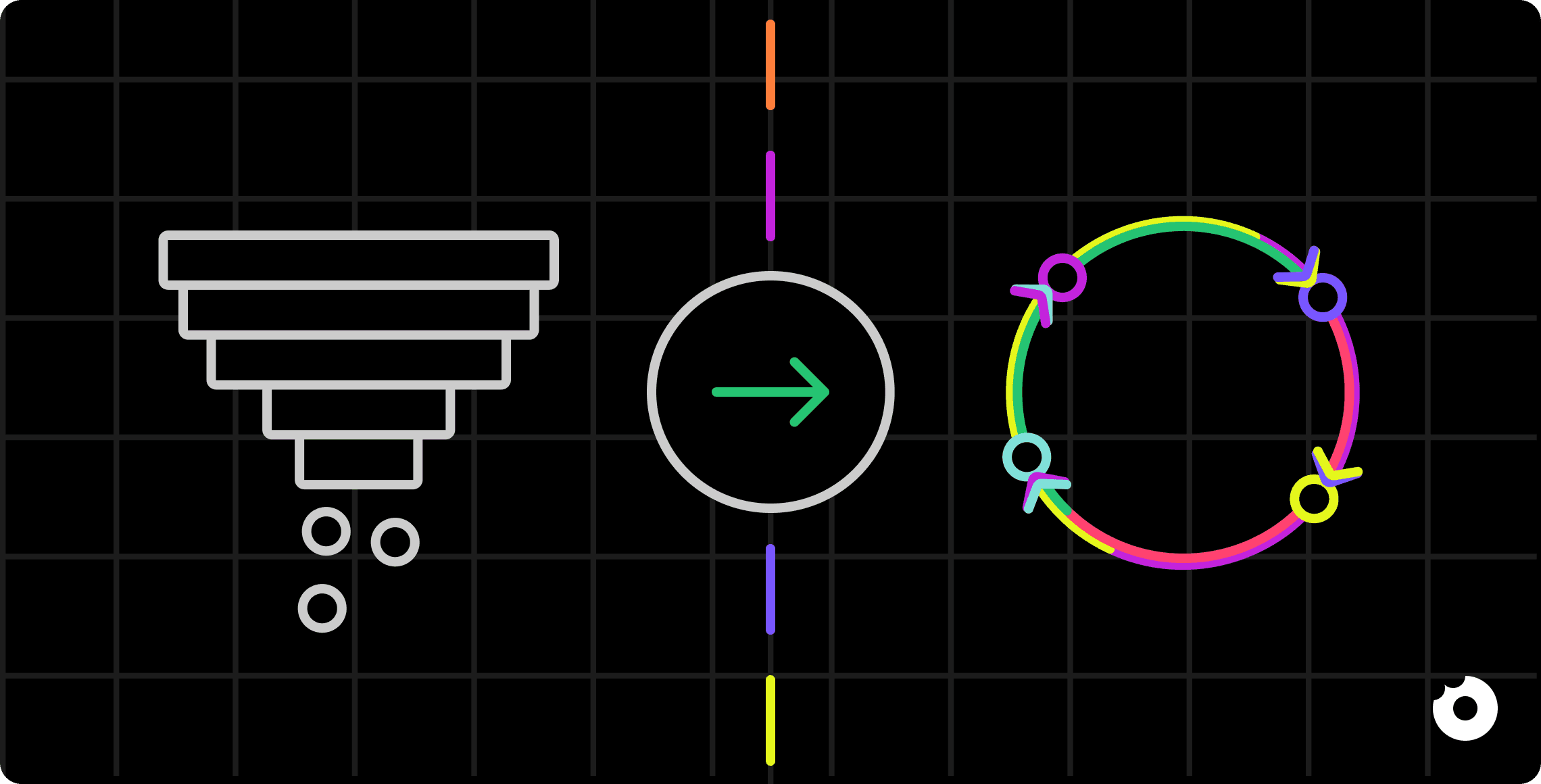
Most SaaS growth strategies are built on a funnel: acquire users, activate them, monetize, retain. Marketing drives the top, sales converts the middle, and customer success holds the bottom.
The problem? Funnels leak. Every stage loses users, and the only way to grow is to pour more in at the top. That works until acquisition costs rise, channels saturate, and the math stops working.
And the math is stopping. Customer acquisition costs for B2B SaaS have risen 222% over the past eight years. The median SaaS company now spends $2.00 to acquire $1.00 of new ARR, up from $1.76 in 2023. Meanwhile, B2B Google Ads CPC jumped 29% in a single year while click-through rates dropped 26%. The cost of acquiring customers keeps climbing, and the channels keep getting less effective.
Growth loops offer an alternative. Instead of a linear funnel that drains resources, a loop turns the output of one growth activity into the input of the next, creating a compounding effect. But loops are not magic, and most companies misunderstand what it takes to build one.
After working with 80+ SaaS products, we’ve seen both models up close. Here’s what actually works, what doesn’t, and how to think about distribution in a market where the old playbooks are breaking down.
What Growth Loops Actually Are
A growth loop is a closed system where user actions generate outputs that feed back into the system as new inputs. The classic example:
User signs up for Dropbox 2.
User needs to share a file with someone 3.
Recipient gets the file and sees Dropbox 4.
Recipient signs up 5.
New user shares files with more people 6.
Loop repeats
The difference from a funnel is structural. A funnel is linear: awareness leads to consideration, which leads to conversion, and then the process starts over from scratch. A loop is circular: each user’s natural product behavior creates the conditions for the next user’s acquisition.
The compounding effect is the key. In a funnel, doubling acquisition spend roughly doubles new users. In a working loop, each new user generates a fraction of an additional user, which generates a fraction more, and so on. Even a modest viral coefficient (say, 0.3) means every 1,000 users organically generate 300 more, who generate 90 more, who generate 27 more.
Five Types of Growth Loops
Not all loops work the same way. Understanding the types helps you identify which ones are realistic for your product.
1. Viral Loops
Users invite other users as a natural part of using the product.
How it works: User signs up, uses the product in a way that exposes it to non-users, non-users sign up.
Examples:
Slack: Teams invite colleagues to channels. Each new workspace member makes the tool more valuable, which leads to more invitations.
Calendly: Every meeting link a user sends is a product demo. The recipient sees Calendly working, and a percentage sign up.
Figma: Designers share prototypes with stakeholders. Stakeholders create accounts to comment, then start designing.
Reality check: Viral loops get the most attention but are the hardest to build. A K-factor of 0.2 is still meaningful in B2B SaaS. That means each 1,000 users generate roughly 200 additional free users. Meaningful, but not self-sustaining. True K > 1 is extremely rare in B2B.
2. Content / UGC Loops
Users create content that attracts new users through search or sharing.
How it works: User creates content on the platform, content gets indexed or shared, new users discover the platform through that content.
Examples:
Substack: Writers publish newsletters, newsletters attract readers, readers become writers.
Notion: Users create public templates, templates rank in Google, searchers discover Notion.
Pinterest: Users pin images, pins get indexed, searchers find Pinterest pages.
Content loops are closely related to product-led growth strategies, where the product itself drives discovery and adoption.
3. Usage Loops
Product usage itself creates more value or visibility.
How it works: The more the product is used, the better it gets or the more visible it becomes, which attracts more users.
Examples:
Netflix: More viewing data improves recommendations, which increases engagement, which generates more data.
LinkedIn: More users create more connections, which makes the network more valuable, which attracts more users.
4. Paid Loops
Revenue from users funds acquisition of more users.
How it works: Users pay for the product, revenue funds paid acquisition, acquired users pay, revenue grows, and the loop continues as long as LTV > CAC.
Reality check: This is technically a loop, but it’s closer to a well-run funnel than to organic compounding. The “loop” only works if your unit economics are strong enough to reinvest profitably.
5. Sales-Led Loops
This is the model that Salesforce, SAP, and Oracle run. Existing customers generate case studies, referrals, and word-of-mouth that feed the sales pipeline. The loop is slower but works at enterprise scale where viral mechanics don’t apply.
Why Funnels Are Breaking Down
The shift toward loops isn’t happening because loops are theoretically elegant. It’s happening because the inputs to traditional funnels are getting more expensive and less effective.
Paid Acquisition Costs Keep Rising
B2B Google Ads CPC rose 29% year-over-year while click-through rates fell 26%. Paid social costs keep climbing too. For SaaS companies with ACV under $10K, paid acquisition alone often doesn’t pencil out.
SEO Is Changing (But Not Dying)
The “SEO is dead” narrative is overstated, but the landscape is genuinely shifting.
Ahrefs found that AI Overviews reduce click-through rates for #1 positions by 58%, primarily for informational queries. Meanwhile, roughly 60% of all Google searches now end without a click. AI-generated traffic to SaaS sites is growing fast, but it comes from a different mix of sources (ChatGPT, Perplexity, Gemini) that require different optimization.
The nuance matters: high-intent, bottom-of-funnel content still performs well in search. What’s declining is the top-of-funnel blog-spam strategy. HubSpot’s blog lost roughly 80% of its organic traffic in 2024-2025, but multiple analysts argue this was primarily a content strategy failure (ranking for “famous sales quotes” and “resignation letter examples” that had nothing to do with their CRM) rather than proof that SEO is dead.
For B2B SaaS with genuinely useful content, SEO still delivers strong returns. But the margin for error is much smaller than it was five years ago.
Social Media Platforms Are Walled Gardens
Platforms increasingly deprioritize external links to keep users on-platform. The distribution value of posting on LinkedIn, Twitter/X, or Instagram is declining for driving traffic. The engagement happens on-platform, and converting that to product signups requires more friction than it used to.
The Buyer Journey Is Fragmenting
Today’s audiences regularly engage with 7+ platforms and spend 4+ hours daily across search surfaces, from Google and YouTube to Reddit, LinkedIn, and AI assistants. Being visible on one channel is no longer enough.
The Honest Truth About Loops
Growth loops are a useful framework. They’re also frequently overhyped. Here’s what the data actually shows.
Most B2B SaaS Products Can’t Build Viral Loops
The canonical examples (Dropbox, Slack, Calendly, Figma) share specific traits: the product is collaborative, high-frequency, and exposes itself to non-users through normal usage. Most B2B tools don’t have these properties. An invoicing tool, an HR platform, or a data warehouse doesn’t naturally create situations where non-users see the product in action.
A K-factor of 0.2 is still meaningful in B2B SaaS. That’s real referral volume, but it’s not a self-sustaining loop. It’s a referral bonus layered on top of other acquisition channels.
Loops Require Product Architecture, Not Marketing Tactics
You can’t bolt a growth loop onto an existing product. Loops are product decisions, not marketing campaigns. Dropbox didn’t add referrals as an afterthought. The sharing mechanic was core to how the product worked. Slack’s invitation flow was central to the product experience.
If your product architecture doesn’t naturally create moments where non-users encounter the product, a referral program won’t fix that.
Funnels First, Loops Second
The practical consensus among growth practitioners: use funnels to get from 0 to product-market fit, then layer loops on top once you have enough users and enough data to identify which loop mechanics actually work.
ProductLed’s 2025 analysis of 446 B2B SaaS companies found that self-serve revenue is the strongest performance lever. Companies moving from $0 to $100K-$500K in self-serve revenue reported 14.5% higher overall performance, 25.8% better pricing optimization, and nearly double profitability (68% vs. 36.4%). The compounding benefits here map to what people call “growth loops,” but the framing is about product mechanics, not abstract loop diagrams.
Metrics That Actually Matter for Growth Loops
If you decide to invest in a loop, measure it properly. These are the metrics that separate working loops from wishful thinking.
Viral coefficient (K-factor): The number of new users each existing user generates. K = invites sent per user x conversion rate of those invites. K > 1 means self-sustaining growth (rare in B2B). K of 0.2-0.5 is a solid referral bonus on top of other channels.
Cycle time: How long it takes for one “turn” of the loop to complete. A content loop where a user publishes a post, it gets indexed, and a new user signs up might take weeks. A viral loop where someone sends a Calendly link takes minutes. Reducing cycle time often has a bigger impact on growth than increasing the viral coefficient.
Retention rate: The most overlooked loop metric. A loop with a K-factor of 0.5 but 90% monthly retention massively outperforms a loop with K of 0.8 but 60% retention. Retention is the compounding engine. Without it, the loop spins but doesn’t accumulate.
Loop-specific conversion rate: What percentage of people exposed to your product through the loop actually sign up? This is where design matters most, and where most loops fail silently.
Common Mistakes When Building Growth Loops
Bolting a loop onto the wrong product
Not every product has natural loop mechanics. If usage is solo, infrequent, or invisible to others, forcing virality through a referral program won’t create a loop. It’ll create a coupon code. The product architecture has to support the loop. Trying to add viral mechanics to an invoicing tool is fundamentally different from adding them to a collaboration platform.
Optimizing the loop before fixing retention
A growth loop with a leaky bucket is just a faster way to churn users. If new users don’t stick around, a viral coefficient of 0.5 means you’re generating a lot of signups that disappear in 30 days. Fix retention first. Then layer on loop mechanics.
Ignoring cycle time
Teams obsess over improving conversion rates within the loop but rarely think about how long each cycle takes. Shortening the loop from 14 days to 3 days can have a dramatically larger impact than improving conversion from 10% to 15%.
Measuring vanity viral metrics
Tracking “invites sent” without tracking “invites that led to activated users who retained for 30+ days” gives you a false sense of progress. The loop isn’t working until the users it generates are as valuable as the users from other channels.
What to Do Instead: Practical Distribution Strategy
Rather than chasing the Dropbox referral dream, focus on what’s actually working in 2025-2026.
1. Build Self-Serve Revenue Mechanics
The ProductLed data is clear: self-serve capability is the single biggest lever for B2B SaaS performance. This means investing in frictionless onboarding, clear pricing, and a product that demonstrates value before a sales call. See our PLG guide for a deeper breakdown.
2. Invest in High-Intent Content, Not Blog Spam
The SEO opportunity hasn’t disappeared. It’s shifted to bottom-of-funnel, high-intent content that solves specific problems. If someone searches “how to build onboarding feedback loops,” they’re not casually browsing. They have a real problem. Content that answers specific questions with real depth still ranks and converts.
3. Be Where Your Buyers Actually Search
Reddit has surpassed traditional software review sites for SaaS discovery and is now the #1 cited domain in AI-generated responses. LinkedIn is where B2B buyers build opinions. YouTube is where they learn. Optimize for the full landscape, not just Google.
4. Embed Distribution Into the Product
This is the loop principle applied practically. Ask: does using our product create a moment where a non-user sees it? If yes, optimize that moment. If no, look for ways to create shareable outputs, collaborative features, or public artifacts that generate visibility.
5. Identify Your Real Bottleneck
Companies that excel at identifying their primary growth bottleneck report 41% faster revenue growth. Before building a growth loop, diagnose what’s actually limiting growth. Is it awareness? Activation? Retention? The answer determines which loop type (if any) is the right investment. Our guide on defining business goals for product analytics covers how to set up this diagnostic process.
How Design Drives Distribution
Distribution doesn’t just happen in marketing. The product experience itself is a growth mechanism.
Every screen a user shares, every invite flow, every onboarding moment, every collaborative workspace is a distribution event. The design of these interactions determines whether they generate new users or waste the opportunity.
This is where we see the biggest gap across the 80+ SaaS products we’ve worked on. Teams invest in loop mechanics (referral programs, invite flows, shareable content) but under-invest in the design of those moments. A confusing invite flow kills a viral loop. A slow onboarding experience kills activation. A poorly designed collaboration feature kills network effects.
The pattern that works: treat every user-facing moment that involves a non-user as a conversion opportunity. Design it with the same care you’d give a landing page. That means clear value props, minimal friction, and an onboarding experience that gets new users to value fast.
For a structured approach to identifying these opportunities, a UX audit can map every touchpoint where design is either enabling or blocking growth.
Want us to audit your product’s growth touchpoints? Book a discovery call - we help SaaS companies design products that drive acquisition, activation, and retention.
Conclusion
The shift from funnels to loops is real, but it’s more nuanced than most content suggests. Funnels aren’t dead. SEO isn’t dead. Loops aren’t magic. The real story is that acquisition costs are rising, channels are fragmenting, and the companies that win are the ones that build distribution into the product itself.
Start with the fundamentals: a product that delivers value quickly, an onboarding flow that minimizes friction, and a clear understanding of where your specific bottleneck is. If your product naturally creates moments where non-users encounter it, invest in making those moments as smooth and compelling as possible. If it doesn’t, focus on self-serve revenue mechanics, high-intent content, and multi-platform presence.
The companies we’ve seen succeed aren’t the ones chasing viral coefficients. They’re the ones obsessively improving the experience at every touchpoint, from first visit to daily use.
Want to identify where your product experience is blocking growth? Talk to our team - we help SaaS companies design products that drive acquisition, activation, and retention.
Questions, answered.
What is the difference between a growth funnel and a growth loop?
A funnel is linear: users move through stages (awareness, consideration, conversion) and the process starts fresh with each new user. A loop is circular: the output of one user's activity (sharing, creating content, inviting teammates) becomes the input that acquires the next user. The key difference is compounding. Funnels require constant new investment at the top. Loops generate some portion of new growth from existing usage.
What are the main types of growth loops?
The five main types are: viral loops (users invite others through product usage), content/UGC loops (user-created content attracts new users), usage loops (more usage creates more value or visibility), paid loops (revenue funds acquisition that generates more revenue), and sales-led loops (customer success drives referrals and case studies). Viral and content loops get the most attention, but paid and sales-led loops are more common in practice, especially in B2B.
Do growth loops work for B2B SaaS?
They can, but with realistic expectations. The average viral coefficient in B2B SaaS is 0.2, meaning each 1,000 users generate about 200 additional users organically. That's valuable but not self-sustaining. True viral loops (K > 1) are rare in B2B. The most practical approach for B2B is combining self-serve product mechanics with content loops and sales-led referral loops, rather than chasing viral growth.
Is SEO dead for SaaS in 2025?
No, but the old SEO playbook is dying. AI Overviews reduce click-through rates for informational queries, and 60% of searches now end without a click. Top-of-funnel blog content is the hardest hit. However, high-intent, bottom-of-funnel content still ranks and converts well. B2B SaaS companies with genuinely useful, specific content continue to see strong SEO returns. The winners are those optimizing across multiple platforms (Google, Reddit, YouTube, AI assistants) rather than relying on Google alone.
How do I know if my product can support a growth loop?
Ask three questions: (1) Does normal product usage create moments where non-users encounter the product? (2) Is the value proposition clear enough that a non-user can understand it from a brief exposure? (3) Can a new user experience value quickly enough to convert from that exposure? If yes to all three, you have the foundation for a viral or content loop. If not, focus on paid or sales-led loops, and invest in making your product experience strong enough to drive retention and referrals.
What metrics should I track for growth loops?
The four key metrics are: viral coefficient (K-factor), which measures how many new users each existing user generates; cycle time, which measures how long one turn of the loop takes; retention rate, which determines whether the loop accumulates users or just churns them; and loop-specific conversion rate, which tracks what percentage of people exposed through the loop actually sign up and activate.
What are common mistakes when building growth loops?
The biggest mistakes are: trying to force viral mechanics onto products that don't naturally expose themselves to non-users, optimizing the loop before fixing retention (a fast loop with high churn just burns through users faster), ignoring cycle time (shortening the loop often matters more than improving conversion), and measuring vanity metrics like "invites sent" instead of tracking whether loop-generated users actually retain.
What should I focus on first: funnels or loops?
Funnels. The practical consensus is: use funnels to reach product-market fit, then layer loops on top once you have enough users and data to identify which loop mechanics actually work. Trying to build a growth loop before you have retention figured out is like pouring water into a bucket with holes. Fix the bucket first.